 Moderate
Status
Description
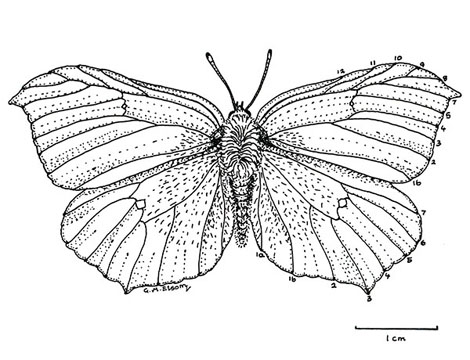
A medium-sized white butterfly with broken black tips to the forewing upperside, and a marbled green hindwing underside. The white spots in the black tip of the forewing distinguish it from female Anthocharis cardamines. The large discoidal black spot, crossed with white veins on the forewing, the black markings on the upperside hindwing, and irregular white marks on the underside hindwing distinguish it from Euchloe ausonia. The male and female are similar, except the female has more extensive black markings on the hindwing upperside.
Habitat Requirements
This migratory butterfly probably uses Corfu as a refueling stop rather than a breeding ground. Subsequently, it can on occasions be encountered nectaring, near the coast. As is the case with most migrants it is more abundant in the autumn and its most frequently seen on Aromatic Inula Dittrichia vicosa.
Larval Foodplants
Aurinia saxatilis, Swine-cress Lepidium coronopus, Lesser Swinecress Lepidium didymum, Hoary Cress Lepidium draba, Wild Mignonette Reseda lutea.
*The information provided in the tables below is based on verified sightings of the Eastern Bath White submitted via this website since 1st January 2021.
First and Last Sightings
| Year | First | Last/latest | # Days |
|---|---|---|---|
| 2026 | 13/04/2026 | 21/09/2026 | 162 days |
| 2025 | 18/02/2025 | 02/11/2025 | 258 days |
| 2024 | 25/03/2024 | 08/11/2024 | 229 days |
| 2023 | 16/02/2023 | 17/11/2023 | 275 days |
| 2022 | 10/02/2022 | 29/10/2022 | 262 days |
| 2021 | 25/04/2021 | 05/11/2021 | 195 days |
Number of Observations
| Year | Number of observations |
|---|---|
| 2026 | 7 |
| 2025 | 48 |
| 2024 | 79 |
| 2023 | 70 |
| 2022 | 61 |
| 2021 | 61 |
| Grand Total | 326 |
Taxonomy
- Vernacular/Common Name: Eastern Bath White
- Family: Pieridae (Swainson, 1820)
- Sub-family: Pierinae (Swainson, 1820)
- Tribe: Pierini (Duponchel, [1835])
- Genus: Pontia (Fabricius, 1807)
- Species: edusa (Fabricius, 1777)
References
For a list of references, please see our bibliography page.